—— NEWS CENTER ——
Dimensions and Shape Accuracy
Thickness Range: 0.30–3.5mm (Mainstream specifications 0.5–2.0mm)
Thickness Tolerance: According to Q/BQB 401, standard accuracy ±0.03–0.08mm, high accuracy ±0.01–0.03m
Width: 600–1500mm (Common 1000/1250mm)
Length: 2000–6000mm (Fixed length/Unfixed length)
Flatness: ≤5mm/m (Standard accuracy), ensuring fit during subsequent processing.
Surface Quality and Roughness
Surface Condition: Annealed + Smooth (S), Default is Matte (D), Glossy (B) optional
Surface Quality: FB (higher-grade finish) is the default, FC/FD can be upgraded as needed
FB: Minor scratches and indentations are allowed, do not affect molding and painting
FC: No obvious defects on the better side, the other side ≥ FB
FD: No defects affecting appearance on both sides, suitable for appearance parts
Surface Roughness (Ra): Matte 0.6–1.9μm, Glossy ≤0.9μm
Appearance Requirements: No scars, cracks, inclusions, delamination, steel strip is allowed to be delivered with defects but ≤6% of the total length.
Special Performance Requirements
Tensile Strain Marks: SPCC has no warranty period, SPCD ≥3 months, SPCE ≥6 months without Lüders bands (avoid surface tensile marks)
Oil Supply: Default is rust-preventive oil, will not rust within 6 months, oiling can be agreed upon.
Production Process and Key Control Points
Steelmaking → Continuous Casting: Low-carbon steel (C≤0.12%), LF refining to control P and S, slab homogenization annealing.
Hot Rolling → Pickling: Hot rolling temperature 900–1100℃, laminar flow cooling; hydrochloric acid pickling (HCl) to remove oxide scale, surface roughness Ra≤3.2μm.
Cold Rolling: Six-roll/four-roll mill, multi-pass reduction (total reduction 20–50%), precise control of thickness tolerance, lubricated rolling to ensure surface quality.
Continuous Annealing: 650–750℃, nitrogen-hydrogen protective atmosphere, recrystallization to eliminate work hardening and restore plasticity.
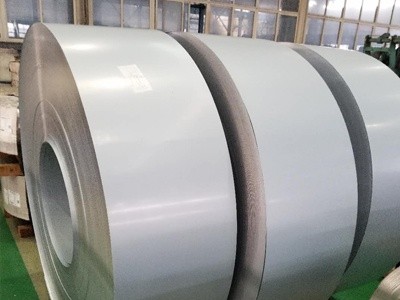
Leveling → Finishing: 0.5–2% light reduction leveling to eliminate yield plateaus and adjust surface roughness; slitting, cutting to length, surface cleaning and oiling.
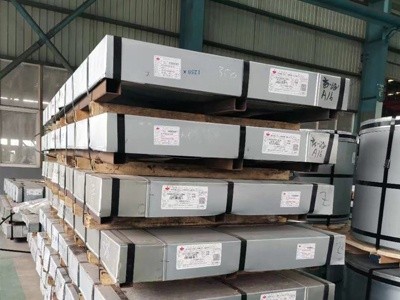
Inspection and Packaging: Batch-by-batch inspection (chemical composition, mechanical properties, surface finish, dimensions). Packaging conforms to Q/BQB 400, providing moisture and rust protection.
Inspection and Acceptance Rules
Inspection Batch: Same brand, same specification, same processing condition, same heat treatment, ≤30 tons.
Sampling: Chemical composition: 1 sample per furnace; Mechanical properties, bending, hardness: 1 sample per batch, transverse sampling.
Judgment: Single item failure allows for double retesting; if retesting still fails, the entire batch is rejected.
Arbitration: Based on GB/T 228 (tensile strength), GB/T 232 (bending), and SAE J911 (roughness).
Our Factory's Internal Control Upgrade Key Points (Benchmarking Industry Advanced Standards)
Precise Composition Control: C≤0.10%, Alt≥0.025%, P, S≤0.030%/0.020% respectively, improving deep-drawing performance.
Upgraded Precision: Mainstream thickness tolerance ±0.01–0.02mm, flatness ≤3mm/m, suitable for precision structural components.
Surface Consistency: Ra stable at 0.8–1.2μm, FB surface with zero obvious defects, meeting the appearance requirements of home appliances and chassis.
Performance Stability: Yield strength fluctuation ≤15MPa, elongation ≥38%, ensuring consistency in batch processing.
Green Production: Pickling wastewater reuse rate ≥98%, waste acid and iron oxide scale fully recycled, meeting environmental protection requirements.

Get A Free Quote Now